I Switched to the Dell S3225Qc and Here is What Happened
The landscape of professional and creative workspaces has shifted dramatically in recent years. As laptop hardware becomes increasingly powerful, with mobile workstations now rivaling the performance of high-end desktops, the bottleneck for productivity often shifts from the processor to the canvas. For users accustomed to the cramped confines of a 14-inch or 16-inch laptop screen, the move to a high-resolution external display is often the single most significant upgrade they can make. Among the sea of available options, the Dell S3225Qc has emerged as a compelling candidate for those seeking to bridge the gap between enthusiast-grade features and professional-grade reliability.
Transitioning to a 31.5-inch 4K monitor is a transformative experience for anyone who spends their day navigating complex spreadsheets, editing high-resolution video, or managing dozens of browser tabs. The Dell S3225Qc, positioned within Dell’s versatile S-series, represents a strategic balance of form and function. It is designed to cater to the modern professional who demands more than just a basic display but may not require the specialized color-calibration tools found in the much more expensive UltraSharp PremierColor lines.
The Evolution of the Desktop Experience
When a user decides to integrate a primary monitor of this scale into their laptop-centric workflow, they are essentially looking for an extension of their digital environment that feels seamless. The Dell S3225Qc addresses this by offering a massive UHD (3840 x 2160) resolution. On a screen of this size, the pixel density remains high enough to deliver crisp text—a critical factor for writers, developers, and researchers—while providing the physical real estate to display multiple applications side-by-side without the need for a secondary monitor.
The "switch" mentioned in this analysis isn't just about changing hardware; it is about changing how one interacts with information. Utilizing a laptop as a "brain" and the S3225Qc as the "vision" allows for a workstation that is both portable and powerful. In this configuration, the USB-C connectivity of the monitor becomes the central nervous system, handling data, video signals, and power delivery through a single cable, reducing desktop clutter and simplifying the transition from a mobile to a stationary setup.
Comprehensive Product Analysis
The Dell S3225Qc is built around a VA (Vertical Alignment) panel, which distinguishes it from many of its IPS (In-Plane Switching) competitors in the same price bracket. This choice of panel technology is central to the monitor's performance characteristics. VA panels are renowned for their exceptional contrast ratios, and the S3225Qc is no exception. While standard IPS monitors often struggle with "IPS glow" and grayish blacks, this Dell model provides deep, rich blacks that make it an excellent choice for users who frequently work in dimly lit environments or enjoy media consumption alongside their professional tasks.
The screen features a 1800R curvature. While some professionals remain skeptical of curved displays for design work due to potential line distortion, the curve on a 32-inch panel is subtle and serves a physiological purpose. It brings the edges of the screen closer to the user's peripheral vision, reducing the need for significant head movement and creating a more immersive, ergonomic viewing experience. This is particularly beneficial during long work sessions where eye strain can become a major deterrent to productivity.
Visual Clarity and Color Integrity
For the laptop user moving up to 4K, the first thing they notice is the sheer volume of information that can stay on screen. A 31.5-inch panel at 4K allows for a 100% scaling setting for those with sharp eyesight, or a very comfortable 125-150% scaling for most users, which still leaves significantly more space than a native laptop screen. The S3225Qc covers 99% of the sRGB color gamut, making it more than adequate for web design, digital marketing, and photography where the final output is intended for the web.
The inclusion of HDR support (VESA DisplayHDR 400) provides a boost in peak brightness and dynamic range. While it doesn't reach the heights of localized dimming zones found in high-end OLED or Mini-LED displays, it offers a noticeable improvement in highlights and shadow detail compared to standard dynamic range monitors. This is particularly relevant for buyers who use their laptops for both work and light entertainment, such as 4K streaming or casual gaming.
Ergonomics and Build Quality
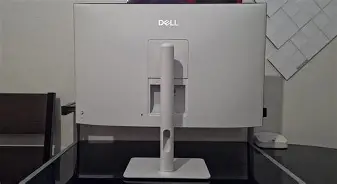
Dell has long been a leader in industrial design for office peripherals, and the S3225Qc follows this tradition. The stand is robust and offers a full suite of adjustments, including height, tilt, and swivel. The ability to perfectly align the external monitor with the laptop screen—or to loft it above the laptop—is essential for maintaining a healthy posture. The aesthetic is clean, featuring a white/platinum silver finish that breaks away from the traditional "boring black" office aesthetic, allowing it to fit naturally into modern home offices.
Find top-rated Laptops & Computers products at great prices.
Shop Amazon →Real-World Use Cases
To understand the impact of switching to the Dell S3225Qc, we must look at how different types of buyers utilize the hardware. The needs of a data analyst differ greatly from those of a software developer or a creative director, yet this monitor manages to provide value across these diverse niches.
The Spreadsheet Power User
For individuals working in finance or logistics, the S3225Qc is a game-changer. The ability to view 40 or 50 columns of a spreadsheet simultaneously without scrolling is not just a convenience; it reduces cognitive load and helps in identifying data trends that might be missed on a smaller screen. The extreme contrast of the VA panel ensures that grid lines and fine text are legible even during high-intensity data entry sessions.
The Software Developer
Developers who connect their laptops to the S3225Qc benefit from the vertical real estate. Large blocks of code can be viewed at once, and the screen is wide enough to facilitate a split-view of a terminal, a code editor, and a browser window for real-time testing. The 4K resolution ensures that font rendering is smooth, which is critical for those who spend eight to ten hours a day reading lines of text.
The Connectivity Enthusiast
One of the primary reasons laptop users choose this specific model is the integrated USB-C hub functionality. In a typical home office setup, a user might have a keyboard, mouse, external webcam, and a backup drive. The S3225Qc allows these peripherals to be plugged directly into the monitor. When the user returns to their desk with their laptop, they simply plug in one USB-C cable. The monitor then charges the laptop (up to 65W Power Delivery) while simultaneously receiving the video signal and connecting all the peripherals. This "one-cable" solution is a significant quality-of-life improvement.
Pros and Cons
Every piece of technology involves trade-offs. The Dell S3225Qc is a highly optimized machine, but it is important for potential buyers to weigh its strengths against its limitations based on their specific desk setups.
- Superior Contrast: The VA panel provides a 3000:1 contrast ratio, which is significantly better than the standard 1000:1 ratio found on most IPS panels, resulting in deeper blacks and more vivid images.
- Integrated Connectivity: The USB-C port with 65W Power Delivery simplifies the desktop experience and eliminates the need for an expensive third-party docking station for many laptop users.
- Subtle Curvature: The 1800R curve enhances immersion and ergonomics on a screen of this size, making the entire display feel more accessible without causing significant distortion.
- Built-in Speakers: Including two 5W speakers provides a decent audio solution for video calls or background music, saving desk space that would otherwise be occupied by external speakers.
- Modern Design: The white and silver aesthetic is sleek and professional, fitting well into contemporary home or office decors.
- Viewing Angles: While VA technology has improved, the viewing angles are not as wide as IPS panels. Users may notice slight color shifting if they are looking at the screen from an extreme side angle.
- Color Accuracy for Print: While 99% sRGB is excellent for web work, professional print designers might miss the wider Adobe RGB coverage found in more expensive dedicated color-grading monitors.
- Motion Blur: VA panels typically have slower response times than IPS or TN panels. While perfectly fine for work and casual media, hardcore gamers might notice some "ghosting" in fast-paced titles.
- Power Delivery Limit: The 65W output is sufficient for most ultrabooks and mid-range laptops, but high-performance 16-inch gaming or workstation laptops may still require their own power bricks during heavy loads.
Comparison Profile: 32-Inch 4K Market
When considering the Dell S3225Qc, it is helpful to see how it sits in the broader ecosystem of large-format productivity monitors. The following table highlights key specifications that laptop users should compare when making their decision.
| Feature | Standard 27" 4K IPS | Dell S3225Qc (32" VA) | Pro-Grade 32" IPS |
|---|---|---|---|
| Screen Real Estate | Moderate (Good for single tasks) | Extensive (Ideal for multitasking) | Extensive (High accuracy) |
| Contrast Ratio | 1000:1 | 3000:1 | 1000:1 - 1300:1 |
| Panel Geometry | Flat | 1800R Curved | Flat |
| Connectivity | HDMI / DisplayPort | USB-C (65W PD) / HDMI / DP | Thunderbolt 4 (90W+ PD) |
| Color Gamut | 95-99% sRGB | 99% sRGB | 100% sRGB / 98% DCI-P3 |
Buying Guide: Is the S3225Qc Right for You?
Choosing a monitor of this size is a significant commitment of both desk space and budget. Before finalizing the switch, consider these critical factors to ensure the hardware aligns with your laptop and working style.
Check Your Desk Depth
A 32-inch curved monitor takes up a surprising amount of visual and physical space. If your desk is shallow (less than 24 inches deep), a monitor of this size may sit too close to your eyes, making it difficult to take in the whole screen without straining. Ensure you have enough depth to sit at an appropriate distance—typically an arm's length or slightly more.
Find top-rated Laptops & Computers products at great prices.
Browse Now →Verify Laptop Compatibility
Most modern laptops with USB-C or Thunderbolt ports will handle the S3225Qc with ease. However, if your laptop is older, check if its internal graphics card supports 4K output at 60Hz. Some older HDMI ports are limited to 4K at 30Hz, which results in a "choppy" cursor movement that can be very frustrating for daily work. Using the USB-C connection is almost always the preferred method for the best experience.
Evaluate Your Color Needs
If your work involves producing content for Instagram, YouTube, or general web use, the S3225Qc is more than capable. However, if you are a professional colorist working on feature films or a high-end print photographer, you may want to look toward Dell's UltraSharp or Alienware OLED lines. For the other 90% of users—including coders, writers, managers, and analysts—the color performance here is stellar.
Consider the Curve
Some users love the curve for the "wraparound" feeling it provides, especially on a screen this wide. Others find it distracting when they are looking at perfectly straight lines in architectural software or CAD. If you have never used a curved monitor, try to view one in person. The 1800R curve is relatively gentle, but it is a distinct departure from the flat panels found on laptop lids.
Integration and Workflow Optimization
Once the switch is made, the real work begins in optimizing the software environment. Windows and macOS handle 4K scaling differently. For Windows users, the "Snap Layouts" feature becomes incredibly powerful on a 32-inch screen. You can easily snap four windows into the corners of the display, effectively giving you the equivalent of four 16-inch 1080p monitors in one seamless frame.
For macOS users, the "Mission Control" and "Spaces" features allow for an expansive digital desktop. Because the Dell S3225Qc handles the bulk of the window management, the laptop screen can be relegated to secondary tasks, such as keeping an email client or Slack open, while the "heavy lifting" of research and creation happens on the 4K canvas. This hierarchy of information helps in maintaining "deep work" cycles, as the most important task is always front and center on the highest-quality screen.
Conclusion
The switch to the Dell S3225Qc represents a significant step up for the laptop-bound professional. It addresses the primary pain points of mobile computing—limited screen space and cluttered connectivity—without the astronomical price tag of boutique creative displays. By leveraging the high contrast of a 4K VA panel and the ergonomic benefits of a curved screen, it creates a workstation environment that is as comfortable as it is productive.
Whether you are looking to streamline your desk with a single-cable USB-C solution or you simply need more room to let your projects breathe, the S3225Qc stands as a testament to how far mainstream display technology has come. It isn't just a monitor; it is a specialized tool that enhances the capability of the laptop sitting next to it. For those who find themselves constantly toggling between windows and squinting at small text, making the switch to a display of this caliber is an investment that pays dividends in every hour of the workday.